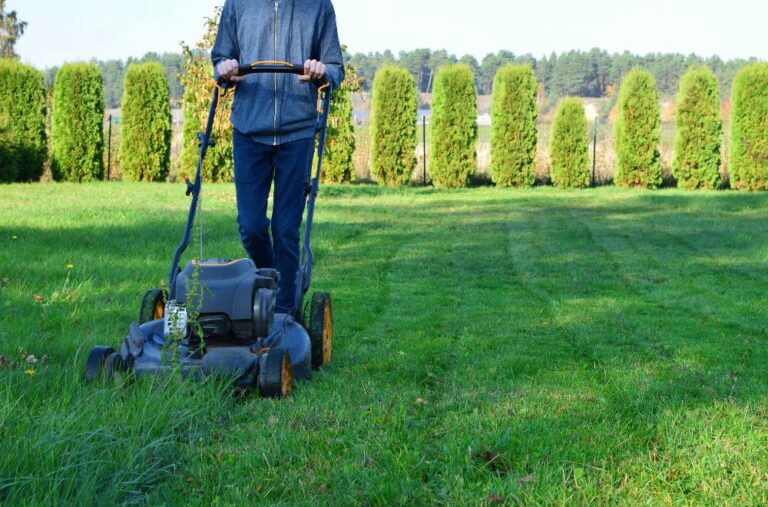
Lawns can be attacked by all kinds of invaders, including insects, fungi and weeds. Some weeds can even resemble grass, but they are still unwelcome arrivals because they can damage areas of your lawn or even kill it.
At first, grass-like weeds might not be easy to spot, and you may mistake them for part of your lawn – so to help, here are 13 weeds that look like grass to help you identify and deal with them quickly and efficiently. Each of these grasses requires a certain weed management approach or a combination of several ones.
If you want to learn about all the weeds that can grow in your lawn – including some we talk about below – you can check out this video before reading on.
List of Weeds that Look Like Grass
1. Crabgrass (Digitaria sanguinalis and Digitaria ischaemum)
One of the most common lawn invaders you may come across is crabgrass. Crabgrasses are also known as fingergrasses and belong to the genus Digitaria.
In the northern US, the most prevalent species is Digitaria sanguinalis, commonly known as large crabgrass. In the southern half, Digitaria ischaemum, also known as smooth crabgrass, is more frequently encountered.
Crabgrasses thrive in sparse lawns that are lightly watered, unfertilized, and poorly drained. They are annual, so they die out each year at the start of winter, but each plant can produce up to 150,000 seeds a year, which germinate the following spring.
When it dies, crabgrass can leave unsightly areas of dead grass in your lawn, but it is easy to deal with. If you reseed your grass and keep your lawn watered, fertilized, and healthy, crabgrass won’t be able to compete and won’t return the following spring.
However, once it takes root, it can spread rapidly throughout your lawn if you don’t act. To combat it, pull it up by hand when it appears or keep cutting it to prevent it from seeding. Alternatively, you can consider using herbicide for more serious infestations.
2. Annual Bluegrass (Poa annua)
Annual bluegrass is a common problem in North American lawns. This weed likes cool, moist climates and commonly grows in areas of lawns shaded by trees.
It is related to Kentucky bluegrass but has a lighter, brighter green shade. You can also identify it by the long ligule (membrane) holding the base of the leaf to the stem.
The best course of action is to ensure you don’t provide the conditions it enjoys, so avoid creating the shaded, moist environment it thrives in. If you see some growth, you can treat it with herbicides; pre-emergent herbicides also exist to prevent it from returning.
3. Common couch (Elymus repens)
Common couch, Elymus repens, also goes by several other names, including couchgrass and quackgrass. A perennial weed that thrives in sun or shade, it is hardy and spreads via rhizomes, with a tough root system that makes it difficult to remove.
It will probably arrive in your lawn as airborne seeds, and it likes to make its home in sparse, unhealthy lawns, so the best way to deter it is to keep your lawn healthy.
When you see it growing in your lawn, you can dig it up by hand – but you need to pull out every last piece, or anything left in the soil will regenerate, and you will quickly find yourself dealing with new growth.
If left unchallenged, it will spread quickly throughout your lawn, so deal with it as soon as you notice it.
4. Nutsedge (Cyperus esculentus and Cyperus rotundus)
Yellow nutsedge (Cyperus esculentus) and purple nutsedge (Cyperus rotundus) are two weeds you really don’t want in your lawn. They can arrive either by air via seeds or below ground via rhizomes or tubers, and as perennial weeds, once they’re in, they’re extremely hard to get out.
The problem is, since it will regrow from any fragments you leave in the ground, pulling it up won’t help – and may even make the problem worse.
The best plan is to keep your lawn lush and healthy so nutsedge can’t move in in the first place. However, once it’s there, you’ll probably need to turn to herbicides to kill it and prevent it from returning.
5. Yellow salsify (Tragopogon dubius)
Native to southern and central Europe and western Asia, this weed is now also present in North America, where it is considered invasive.
Yellow salsify, also known as western salsify, prefers sunny areas and develops yellow flowers followed by large puffballs.
If you mulch your garden and lawn and keep your lawn healthy, this weed won’t be able to establish itself. If it does, you can pull it out, and you can also cook and eat the roots, which are said to have a flavor reminiscent of oysters!
6. Green and yellow foxtails (Setaria viridis and Setaria pumila)
Named for their resemblance to foxtails, these grass-like weeds are another annoyance for lawn owners. One problem is that these fluffy-looking foxtails contain hundreds of seeds ready to spread throughout your lawn and the rest of your garden.
Like many weeds that like to invade lawns, foxtails can be kept at bay by keeping your grass healthy. When grass is thriving, foxtail won’t be able to get a foothold, and that is the best solution.
If it does manage to take root, you can simply pull it out or even just leave it to die since it is an annual rather than perennial weed. Once it dies, take steps to improve your lawn’s health because if your grass is thick and lush, foxtails won’t be able to return the following year.
7. Johnsongrass (Sorghum halepense)
If left to its own devices, johnsongrass can reach heights of up to seven feet – although most homeowners are unlikely to allow this to happen in the middle of their lawn.
It is a perennial weed, but you can deal with it relatively easily just by digging it up or by dousing it in vinegar.
Another solution for larger patches is tilling the soil to expose the rhizomes to the cold of the winter, which will kill them – though of course, you will have to reseed the following year.
8. Creeping bentgrass (Agrostis stolonifera)
This perennial grass species is sometimes planted deliberately and is a popular choice for putting greens and fairways on golf courses in the northern US.
However, it can also invade lawns, spreading through stolons and appearing as light patches in your grass. It doesn’t like too much heat and turns brown as temperatures rise.
If creeping bentgrass invades your lawn, the best option is to use a suitable herbicide to kill it.
9. Smooth bromegrass (Bromus ramosus ramosus)
Another tricky customer that is best avoided, smooth bromegrass can rapidly take over a lawn if you don’t do anything to stop it. This is because of its dense root system and its ability to spread via rhizomes – and once it’s established, you’ll have trouble getting rid of it.
However, it will struggle if mown short and crowded out by healthy, thriving lawn grass, so if you keep the grass you want growing healthy and thriving, it will defeat bromegrass on its own. For more extensive infestations, effective herbicides also exist.
10. Carpetgrass (Axonopus compresus and Axonopus affinis)
These two related perennial species grow in thick mats and can reach up to 12 inches in height. They prefer moist, shaded areas with acidic soils – to kill them, you can use a quarter of a cup of salt mixed in a gallon of water or a treatment of lime to lower the acidity of the soil.
11. Path rush (Juncus tenuis)
This weed can grow up to 24 inches and is also known as slender rush, field rush, slender yard rush and poverty rush. It spreads underground via rhizomes, making it hard to control once it’s present.
Herbicides are not effective against this unwelcome arrival, so you’ll need to get on your hands and knees and pull it up manually. When you do, try to pull up the whole root system in one go to stop it from regenerating from pieces left underground.
Another option is to keep your lawn mown short, which will prevent it from sending out seeds – although as a perennial, it may keep growing back from the roots still in the ground.
12. Tall fescue (Festuca arundinacea)
This long-lived perennial is another grass commonly used for lawns, but it can also arrive uninvited and take over if not controlled properly. The properties that make it a great lawn option are also what make it a formidable weed.
It is a hardy species that spreads via rhizomes and is drought-resistant, making it difficult to vanquish once present. Your best option is smothering it by covering it with tarp, cardboard, newspaper, or something similar and letting it die from lack of sunlight.
13. Goosegrass (Eleusine indica)
This small but invasive grass prefers warmer climates and is named for the strands that spread out like a goose’s foot.
It can move into disturbed areas of lawns, especially where the soil is compacted and in full sunlight. This means the best preventative action is ensuring your lawn is well aerated and drains well. It can survive being mown closely and will still produce seeds.
Herbicides are an option for removing it from lawns, but some strains have become resistant.
Prevention is Better than Cure
As you have probably noticed, most of these grass-like weeds become established when they find lawns that are in poor health. This allows them to move in and spread, and once they are there, they can often be tough to remove.
For this reason, you can stop them in their tracks by keeping your lawn healthy and well cared for. However, if these grassy weeds do make your lawn their home, you need to identify them quickly and remove them to prevent them from propagating further.