A lawn with proper drainage is one of the most important factors in maintaining lush, green grass and protecting your landscape. When water cannot move freely through your lawn, it creates a range of problems that affect not only your turf but also your garden, outdoor living areas, and even your home’s foundation.
Some lawns look great in dry weather and turn into a swamp, mosquito breeding ground, or mud pit within hours of a heavy storm. If that sounds familiar, you’re dealing with one of the most common yard complaints there is: lawn drainage problems. The frustrating part is that drainage issues rarely announce themselves clearly. They show up as soggy patches, dying grass, or a basement that smells faintly of damp, long before most homeowners connect the dots back to how water moves across their property.
Most lawn drainage problems can be identified and corrected before they become severe. Whether the cause is compacted soil, poor grading, heavy clay, or blocked drainage systems, understanding how water moves across your property is the first step toward finding the right solution.
In this comprehensive guide we are going to break down the common causes of lawn drainage problems, how to diagnose them accurately, and the most effective methods for improving drainage and preventing future waterlogging.
Why Lawn Drainage Matters
Many homeowners think of standing water as cosmetic annoyance after heavy rainfall, thinking it’s disappear within a day to two. However, drainage is one of the quiet foundations of a healthy landscape, and when it fails, the consequences ripple out well beyond the lawn itself.
Grass roots need a balance of water and oxygen to grow properly. When soil remains saturated for long period, the air pockets between soil particles fill with water instead, and roots effectively begin to suffocate. This is reason why lawns with chronic drainage problems usually look fine for a while and then decline all at once again because the root system has been weakening underground long before the grass on top shows it.
Beyond the lawn itself, poor drainage can affect your entire property. Water that repeatedly pools near your home instead of flowing away can seep into basements, crawlspaces, and foundation walls, leading to cracking, efflorescence, or long-term structural issues that are far more expensive to fix than the yard itself. Standing water also creates a breeding ground for mosquitoes, encourages fungal disease in turf, and can kill off garden beds and shrubs that don’t tolerate “wet feet.”
For these reasons, drainage problems are rarely just about the grass. They’re a symptom of how water is moving across your entire property and fixing this properly will protects the lawn, the landscaping, and your property.
Common Signs Your Lawn Has Drainage Problems
Some drainage problems are obvious, a puddle that doesn’t disappear for days is hard to miss. Others are subtler and build up over a season or two before anyone notices the underlying cause. Those Common signs are:
Puddles that Linger
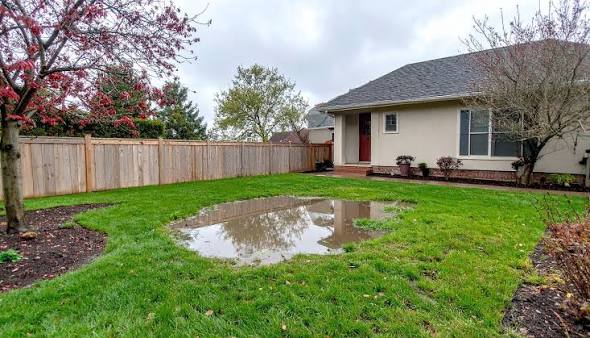
The most obvious warning sign is water that’s still sitting on the surface 24 hours or more after rain is a strong signal that it isn’t infiltrating properly.
Spongy or Squishy turf
If your lawn feels soft and waterlogged underfoot, even well after a storm has passed, points to saturated soil beneath the surface..
Yellow or Dying Grass in Specific Patches
Grass growing in waterlogged soil often turns yellow before eventually dying because its roots cannot access enough oxygen. Affected areas usually appear in the same locations after every heavy rain.
Moss and Algae Growth
Both moss and algae favor consistently damp, shaded, poorly drained conditions, and their spread across a lawn is often a visual map of where water collects.
Increased Mosquito Activity
Standing water provides ideal breeding conditions for mosquitoes. If mosquito numbers suddenly increase around your yard is worth to be investigating.
Water Near the Foundation
Damp basement walls, musty smells, or visible water marks near the base of the house often trace back to grading or drainage issues in the yard.
Erosion Channel
Fast-moving runoff may wash away topsoil, creating channels or exposed roots across your lawn. Erosion is often a sign that water is flowing across the surface rather than soaking into the ground.
Weed Growth
Certain weeds, like sedge, rushes, and some varieties of plantain, tend to thrive in compacted, poorly drained soil and can outcompete turfgrass in those spots.
What Causes of Lawn Drainage Problems
Drainage issues usually come down to some combination of soil, slope, and structure. Understanding which factor apply to your yard is the key to picking the right fix.
Soil Composition
Clay-heavy soil is the most common culprit. Clay particles are extremely fine and pack together tightly, leaving little space for water to move through. Rainwater that would soak into sandy or loamy soil within minutes can sit on top of clay soil for hours or days. Compaction makes this worse — soil that’s been compressed by foot traffic, vehicles, or heavy equipment has even less pore space for water to travel through.
Poor Lawn Grading
Lawns are meant to have a gentle slope that carries water away from the house and toward a safe outlet, like a storm drain, street, or lower area of the yard. When a yard is flat, or worse, slopes toward the house instead of away from it, water has nowhere to go and simply accumulates. Grading problems are sometimes original to a property and sometimes develop over time as soil settles unevenly.
Low Spots and Depressions
Over time, soil naturally settles. Construction work, buried utility lines, tree root decay, and landscaping projects can all create low areas where water collects after rainfall – These depressions often become muddy patches that remain wet long after the rest of the lawn has dried.
Impermeable Surfaces Nearby
Driveways, patios, and walkways don’t absorb water, so all the rain that falls on them gets redirected onto the surrounding lawn. A property with a lot of hardscaping can end up funneling far more water onto the grass than would naturally fall there.
Downspouts and Gutters
A roof collects an enormous amount of rainwater, if gutters overflow or downspouts discharge water directly beside your house, the surrounding lawn may become saturated every time it rains. Extending downspouts several feet away from the foundation often solves this problem.
High Water Table
In some regions, especially those with heavy clay subsoil or proximity to wetlands and rivers, the water table itself sits close to the surface. In these cases, even well-graded, well-aerated soil can struggle to drain because there’s nowhere for the water to go once it reaches saturation depth.
Thatch Buildup
A thick layer of thatch acts like a sponge, instead of allowing rainfall to soak into the soil, the water becomes trapped within the organic layer beneath the grass. Regular dethatching improves water infiltration.
How to Test Lawn Drainage
Before investing time or money into a fix, it helps to understand how bad the problem actually is and where it’s coming from. A few simple tests can clarify both.
Perform a Percolation Test
Dig a hole about 12 inches deep and 6 inches wide in the area of concern. Fill it with water and let it drain completely once, to saturate the surrounding soil. Then fill it again and time how long it takes to drain. Soil that drains an inch per hour or faster is generally considered well-draining. Anything slower than half an inch per hour suggests a real drainage problem that needs addressing.
Observe the Lawn After Rainfall
Simply watching the yard during and after a storm reveals a lot. Note where water pools first, how large the puddles get, how long they take to disappear, and whether water appears to be flowing toward the house at any point.
Checking The Grade
A simple way to check slope is to use a long, straight board and a level. Place one end of the board at the foundation and the other end further out into the yard; a bubble level on top will show whether the ground slopes away from the house (good) or toward it.
Follow Water Flow
On a rainy day, walk the property (carefully) and trace visible water paths. This can reveal whether downspouts, driveways, or neighboring properties are contributing water to the problem area, which changes the best approach to fixing it.
Soil Inspection
Digging a small square of soil and examining its texture can confirm whether heavy clay or compaction is a contributing factor. Dense, sticky, gray-toned soil that holds together in a ball when squeezed is a sign of clay-heavy, poorly draining ground.
Taking the time to perform these simple tests before starting repairs can save both time and money. Once you’ve identified the underlying cause, you’ll be able to choose the most effective drainage solution rather than relying on trial and error.
Fixing Minor Drainage Issues
Not every drainage problem requires major excavation or expensive landscaping work. Many lawns can be restored using simple improvements that enhance soil structure, encourage water absorption, and redirect excess runoff.
Aerate The Lawn
Compacted soil is one of the leading causes of poor drainage. When the soil becomes tightly packed, water cannot penetrate the surface and instead forms puddles.
Core aeration is the most effective solution. Unlike spike aerators that simply push soil aside, core aerators remove small plugs of soil, creating channels that allow water, oxygen, and nutrients to reach the root zone.
For best results:
- Aerate during the active growing season.
- Water the lawn lightly the day before aerating if the soil is very dry.
- Leave the soil plugs on the lawn to break down naturally.
Annual aeration is especially beneficial for clay soils and lawns that experience heavy foot traffic.
Topdress with Compost
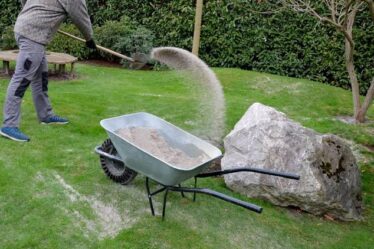
Applying a thin layer of screened compost after aeration gradually improves soil structure. Compost increases microbial activity, enhances drainage, and helps clay soils become more porous over time. Spread no more than ¼ to ½ inch of compost evenly across the lawn, allowing the grass blades to remain visible.
Extend Downspouts
Extending downspouts so they discharge several feet away from the house, rather than right at the foundation, can dramatically reduce the amount of water saturating the nearest section of lawn.
Amend The Problem Area
For small, isolated low spots, mixing compost or coarse sand into the existing soil and slightly building up the area can correct minor unevenness without a full regrading project.
Dethatch the Lawn
If thatch buildup is preventing water infiltration, dethatching (either by hand with a rake or with a mechanical dethatcher) allows water to reach the soil again instead of sitting on top of the grass.
Choose Water-Tolerant Grass or Groundcover
In consistently damp areas that are difficult to fully dry out, switching to a grass variety or groundcover that tolerates wetter conditions can be more practical than fighting the water directly.
Create a Dry Creek Bed
For a natural-looking solution, a shallow, gravel-lined channel can guide surface water toward a safe drainage point while also adding a landscaping feature rather than an obvious drainage fix.
Installing a French Drain
When surface-level fixes aren’t enough, particularly in yards dealing with a genuinely high water table, heavy clay soil, or significant water volume from downspouts and hardscaping, a French drain is often the most effective solution.
A French drain is a trench filled with gravel and a perforated pipe, designed to intercept water below the surface and carry it away to a safer discharge point, such as a storm drain, dry well, or lower area of the property. Unlike surface fixes, French drains address water that’s moving underground, which makes them particularly effective for chronic problems that don’t resolve with aeration or grading tweaks alone.
Basic Installation Steps
Step 1: Identifying the path
The trench needs to run from the problem area to a suitable discharge point, following a downward slope the entire way (generally at least a 1% grade, or about an inch of drop for every 8 feet of trench).
Step 2: Dig the Trench
Most residential French drains are approximately:
- 6–18 inches wide.
- 18–24 inches deep.
The exact size depends on the amount of water being managed.
Step 3: Install Landscape Fabric
Lining the trench with fabric helps prevent soil from clogging the gravel and pipe over time.
Step 4: Filling with gravel and adding the pipe
Place a layer of gravel into the trench before installing the perforated pipe, then cover the pipe with additional gravel, allowing water to filter easily into the system.
Step 5: Wrapping and covering
Fold the landscape fabric over the gravel before covering it with topsoil, grass seed, or sod. Once established, the French drain becomes almost invisible while continuing to remove excess groundwater.
When to Regrade Your Lawn
Sometimes the root cause isn’t the soil texture or a single problem spot, it’s the overall shape of the yard. Regrading means physically reshaping the slope of the land so that water flows away from the house and toward an appropriate drainage point, rather than pooling or running toward the foundation.
Signs that regrading may be necessary include:
- The yard slopes toward the house rather than away from it
- Water problems are widespread across the property rather than isolated to one or two spots
- Multiple smaller fixes (aeration, French drains, downspout extensions) haven’t resolved the issue
- There’s visible evidence of water intrusion into the basement or crawlspace
- The yard was poorly graded during original construction or after a major landscaping project
Regrading is a bigger undertaking than the fixes described earlier. It generally involves bringing in additional topsoil, reshaping the existing slope with heavy equipment or extensive manual labor, and often re-seeding or re-sodding large sections of the lawn afterward. Because getting the slope and drainage direction right is critical — and because mistakes can make water problems worse rather than better, this is a project most homeowners hire a professional grading or landscaping company to handle, particularly when it involves areas close to the foundation.
The general target for grading is a slope of about 2% away from the house, which works out to roughly a 2-inch drop for every 10 feet of distance, maintained for at least the first 10 feet away from the foundation.
Preventing Future Drainage Problems
Preventive maintenance is far easier and less expensive than repairing severe drainage issues. Follow these practices to keep your lawn healthy.
Aerate Regularly
Annual or biennial core aeration helps prevent soil compaction and improves water movement.
Keep Gutters Clean
Blocked gutters overflow during storms, dumping large volumes of water directly beside your home. Cleaning them regularly protects both your lawn and foundation.
Maintain Downspout Extensions
Inspect downspout extensions periodically to ensure they continue directing water safely away from your property.
Control Thatch Buildup
Inspect your lawn annually and dethatch whenever the organic layer becomes too thick.
Improve Soil Over Time
Regular topdressing with compost gradually improves the structure of heavy clay soil, making the lawn naturally more absorbent year after year rather than relying solely on mechanical drainage solutions.
Limit Soil Compaction
Reduce unnecessary foot traffic on wet lawns and avoid parking vehicles or heavy equipment on the grass.
Watch for New Low Spot
Soil settles naturally over time, especially in areas that were recently disturbed by construction, planting, or utility work. Periodically checking the yard for new depressions lets small issues get corrected with a bit of topsoil before they turn into standing water problems.
Inspect Drainage Systems
French drains, dry wells, and dry creek beds can silt up or become blocked with debris over time. A quick seasonal check, especially before the rainy season in your region, ensures they’re still functioning as intended.
Reassess after major changes
Adding a patio, driveway, shed, or other hardscaping changes how water moves across a property. After any major addition, it’s worth watching the yard through a few rainstorms to see whether new drainage issues have developed as a result.
Conclusion
Poor lawn drainage can affect far more than the appearance of your yard. Left untreated, excess water weakens grass roots, encourages disease, attracts pests, damages landscaping, and may even threaten your home’s foundation.
Fortunately, most drainage issues can be corrected once the underlying cause is identified. Whether the solution involves aerating compacted soil, topdressing with compost, redirecting downspouts, installing a French drain, or regrading the landscape, addressing the problem early prevents more costly repairs in the future.
Routine maintenance is equally important. Regular aeration, proper watering, seasonal inspections, and timely attention to small drainage issues will help keep your lawn healthy, resilient, and attractive throughout the year.
With the right combination of diagnosis, repair, and ongoing care, you can transform a soggy, waterlogged lawn into a well-drained landscape that remains lush, functional, and enjoyable in every season.
Frequently Asked Questions
What is the most common cause of poor lawn drainage Problems?
Heavy clay soil combined with soil compaction is the most common cause. Poor grading and blocked drainage systems are also frequent contributors.
How long should water remain on my lawn after heavy rain?
Ideally, standing water should disappear within a few hours. If puddles remain for more than 24 hours, your lawn likely has a drainage problem.
Does standing water always mean a drainage problem?
Not necessarily on its own, a brief puddle right after a downpour is normal. It becomes a genuine concern when water lingers for many hours or days, returns after every rainfall, or is affecting the health of the grass or the foundation of the house.
How do I know if I need a French drain or just better grading?
If your lawn remains wet despite aeration, compost topdressing, and proper grading—or if water repeatedly collects near your home’s foundation—a French drain may be the most effective solution.
Will a sump pump help with lawn drainage?
Sump pumps are designed to remove water that’s already collected in a specific low point, such as a dry well or basin, and are more commonly used for basement or crawlspace water management than for general lawn drainage. For yard-wide drainage issues, a French drain or regrading that relies on gravity to move water away is usually more practical and requires no ongoing power or maintenance.
How often do I need to inspect my drainage system?
Check gutters, downspouts, French drains, and drainage channels at least twice a year and after major storms to ensure they remain clear and functional.
Can poor lawn drainage affect my house?
Yes. Water repeatedly collecting around foundations may lead to cracks, mould growth, basement leaks, and long-term structural damage if left untreated.
Do all types of grass handle wet soil the same way?
No. Some grass varieties, such as certain fescues and select warm-season grasses bred for wet tolerance, handle periodically saturated soil far better than others, which decline quickly when roots sit in water for extended periods. If a section of lawn has a chronic, hard-to-fully-fix moisture issue, choosing a more water-tolerant grass for that specific area can reduce ongoing problems even after drainage improvements are made.