Healthy lawn should feel firm, stable, and comfortable underfoot. almost like walking across a mattress instead of solid turf. If your lawn feels spongy, bouncy, or unusually soft when you walk across it, it’s tempting to ignore it as long as the grass still looks green on top. But a spongy lawn is almost always a sign that something below the surface needs attention, and the longer it goes unaddressed, the more likely it is to turn into thinning grass, dead patches, or a full lawn renovation.
The good news is that most causes of a spongy lawn can be identified and corrected with the right approach. Understanding what is happening below the surface is the first step toward restoring a firm, healthy lawn.
This comprehensive guide will walk you through the most common reasons a lawn develops that mattress-like feel, how to tell which one is affecting your yard, and what actually fixes it.
What Causes a Spongy Lawn?
A spongy feeling underfoot is really just a symptom — the ground is behaving differently than solid, healthy turf should, and there’s a limited list of reasons why. In almost every case, it comes down to one of four underlying issues, sometimes acting alone and sometimes combining to make the problem worse.
The most common cause is a thick layer of thatch sitting between the soil and the grass blades, which compresses like a cushion when you step on it. The second is excess moisture trapped in the soil, either from poor drainage or a high water table, which makes the ground feel soft and waterlogged. The third is a strange one to many homeowners: severely compacted soil can sometimes create a spongy feel at the surface if a thin, less-compacted layer sits above a denser one, causing a slight give as weight shifts through the layers. And the fourth is a root system that isn’t developing properly, whether from disease, pests, or general stress, leaving the grass anchored loosely rather than firmly rooted into the ground beneath it.
Because more than one of these can be present at once, and because the fixes for each are quite different, correctly diagnosing the cause is the most important step before doing anything else to the lawn.
Thatch Buildup
One of the most common reasons a lawn feels soft is excessive thatch.
Thatch is the layer of dead and living organic material — stems, roots, and debris — that naturally accumulates between the soil surface and the green grass blades above it. A small amount of thatch, generally under half an inch, is normal and even beneficial, helping to insulate the soil and retain some moisture.
Problems start when thatch builds up beyond that point. As it thickens, it forms a spongy mat that compresses underfoot much like a natural mattress. Because thatch decomposes slowly, especially in lawns that are overfertilized or mowed too infrequently, it can accumulate faster than it breaks down, gradually thickening year after year until it becomes the dominant layer a person actually steps on, rather than the soil itself.
Thatch buildup tends to be worse in lawns with grass species that spread aggressively via stolons or rhizomes, since these growth habits naturally produce more of the organic material that becomes thatch. It’s also more common in lawns that receive frequent, shallow watering, since this encourages shallow root growth and slower decomposition of dead plant material, and in lawns that are heavily fertilized with fast-release nitrogen, which pushes rapid top growth without necessarily strengthening the root system or breaking down old growth underneath.
A lawn with significant thatch buildup often feels spongy in a fairly uniform way across large sections, rather than in isolated patches, since thatch tends to develop broadly rather than in a single spot.
Poor Drainage
Poor drainage is another major cause of a spongy lawn.
Excess water trapped in or near the root zone is another leading cause of that soft, give-way feeling underfoot. When soil holds more water than it can properly drain, whether from heavy clay content, a high water table, or a yard that’s graded incorrectly, the ground becomes saturated and loses its normal firmness.
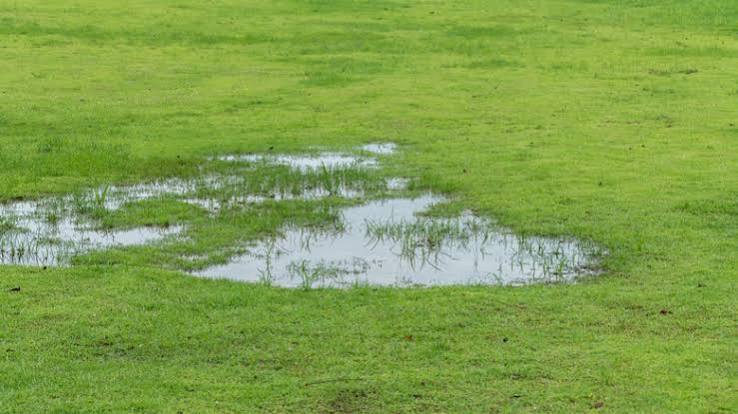
Unlike thatch, which creates a consistent spongy texture across a wide area, drainage-related sponginess is often more localized. It tends to show up worst in low spots, near downspouts, or anywhere water naturally collects after rain. These areas may feel noticeably softer and squishier than the rest of the lawn, sometimes even releasing visible water when pressed with a foot.
Poor drainage compounds over time because saturated soil supports fewer of the beneficial organisms and root structures that normally give turf its firmness. Grass roots in consistently wet soil also tend to stay shallow, since the oxygen they need is displaced by water rather than air, which further weakens the structural integrity of the turf and makes the ground feel less solid underfoot.
This creates an ideal environment for fungal diseases while weakening the overall structure of the turf.
Soil Compaction
Many homeowners are surprised to learn that compacted soil can contribute to a spongy lawn.
Although compacted ground is hard beneath the surface, it often creates a thin, saturated layer of softer soil above it.
When rainwater cannot penetrate the dense soil below, moisture remains trapped near the surface.
As you walk across the lawn, this wet upper layer compresses, producing a soft, springy feeling.
Compaction also prevents grass roots from growing deeply.
Instead of developing strong root systems, the grass remains shallow-rooted and poorly anchored, making the turf feel less stable underfoot.
Compaction is commonly caused by:
- Frequent foot traffic
- Children’s play areas
- Heavy lawn equipment
- Repeated vehicle traffic
- Clay soils
- Construction activity
Symptoms of Soil Compaction
- Water pooling after rain.
- Thin grass in high-traffic areas.
- Difficulty inserting a screwdriver or garden fork into the soil.
- Hard soil beneath a soft surface layer.
- Poor grass growth despite fertilizing.
Root Problems
Sometimes the problem isn’t the soil at all—it’s the grass roots themselves.
Healthy grass develops a dense network of roots that firmly anchor the turf into the ground.
When those roots become damaged, weakened, or destroyed, the lawn loses its structural support and begins to feel loose or spongy.
Several common issues can damage grass roots.
Grub Damage
White grubs are the larvae of several beetle species, feed directly on grass roots beneath the soil surface.
As they consume through the roots system, the grass above becomes only loosely connected to the soil, and affected sections can feel spongy or even lift up in a mat, almost like a loose rug, when pulled.
Fungal Diseases
Certain lawn diseases attack the root system directly, weakening or rotting roots and leaving the grass poorly anchored. Lawns affected this way often show irregular patches of discoloration alongside the spongy texture, rather than a uniform feel across the whole yard.
Root Rot from Overwatering
Overwatering and poorly drained soil can eventually cause root rot, without enough oxygen, roots begin to decay, leaving the grass weak and unstable. Root rot is particularly common in lawns that remain wet for extended periods.
General Root Stress
Extreme heat, prolonged drought, sudden flooding, or improper lawn care practices can all weaken grass roots.
Although temporary, this stress may cause the lawn to feel softer until the root system recovers.
How to Diagnose the Cause
Before choosing a treatment, spend a little time to examine your lawn, simple inspections often reveal the exact cause of the problem.
Measure the Thatch Layer
Use a trowel or a small spade to cut and lift a wedge-shaped section of turf, roughly 3 to 4 inches deep. Measure the brown, fibrous layer sitting between the green grass and the soil. Anything beyond half an inch to three-quarters of an inch suggests thatch is a significant contributor.
Observe Where the Sponginess Occurs
If the entire lawn feels uniformly soft, thatch is often responsible.
A spongy feel concentrated in low-lying areas or after rain points toward drainage. Spots near heavy foot traffic, driveways, or play equipment point toward compaction.
Check Soil Moisture
Digging down 4 to 6 inches in a spongy area a day or two after the last rain. Soil that’s still noticeably wet and dark, rather than moist but crumbly, suggests a drainage problem rather than thatch or compaction alone.
Pull on the Grass
Gently grab a small clump of grass and tug. If it lifts easily from the soil, inspect the roots for signs of grub feeding or disease, healthy grass should resist being pulled up.
Check for White Grubs
Cut a small square of turf, about a foot on each side, and peel it back to inspect the top few inches of soil. Finding five or more C-shaped white grubs per square foot generally indicates a population large enough to be causing visible root damage..
Do the Screwdriver Test
Push a flathead screwdriver into the soil in the affected area. If it meets firm resistance a few inches down after passing through a softer top layer, compaction beneath a thin, saturated surface layer is likely contributing.
Combining a couple of these checks usually narrows the cause down clearly enough to choose the right fix, rather than treating the lawn for the wrong problem.
Best Treatment Methods
Once you’ve identified the cause of your spongy lawn, the next step is choosing the right solution. Because different problems require different treatments, it’s important to fix the underlying issue rather than simply treating the symptoms.
Thatch Buildup
If thatch is responsible for the soft, springy feel, removing the excess organic layer should be your priority.
Dethatching, either with a manual thatching rake for smaller areas or a mechanical dethatcher or core aerator for larger lawns, physically removes the excess organic layer. This is best done during the grass’s active growing season, since the lawn will need to recover quickly afterward. Following up with a light topdressing of compost helps encourage the microbial activity that naturally breaks down thatch going forward.
Improving Poor Drainage
If your lawn feels soft because water cannot drain properly, improving drainage is essential.
Depending on severity, solutions range from aeration and compost topdressing for mild cases, to downspout extensions and regrading for moderate ones, to French drains for more serious or chronic water accumulation. Addressing the drainage problem is necessary before the spongy feeling will fully resolve, since simply dethatching or reseeding a chronically wet area tends to produce only temporary improvement.
Relieving Soil Compaction
Compacted soil prevents healthy root growth and contributes to surface softness.
Core Aeration remains the most standard solution, Unlike spike aerators, physically removing small plugs of soil to relieve the density and allow both water and air to move more freely.
Overseed After Aerating : The holes left by aeration provide ideal conditions for new grass seed and overseeding helps thicken thin lawns and develops a stronger root system over time.
Repairing Root Problems
Weak roots require different treatments depending on the underlying cause.
Treat Grub Infestations
Depending on the severity of the infestation, treatment options range from beneficial nematodes and milky spore (more targeted, longer-term biological controls) to insecticidal treatments timed to the grub’s most vulnerable larval stage, typically in late summer to early fall. Repairing visibly damaged patches usually requires overseeding or resodding once the grub population has been addressed.
Control Fungal Diseases or Root Rot
Treatment depends on the specific disease involved, but generally includes improving airflow and reducing excess moisture (since most turf diseases thrive in damp, poorly ventilated conditions), adjusting watering schedules to allow the soil surface to dry between waterings, and in more severe cases, applying an appropriate fungicide. Improving the underlying drainage and avoiding overwatering also reduces the conditions these diseases need to thrive.
In many cases, especially where more than one factor is contributing, an effective treatment plan combines several of the above — for example, dethatching and aerating together, or treating grubs while also correcting a drainage issue that had already been stressing the grass’s roots.
Lawn Care After Treatment
Water Properly
Avoid watering everyday, water deeply once or twice a week, depending on weather conditions. Deep watering encourages roots to grow further into the soil.
Fertilize Wisely
Use a balanced, slow-release fertilizer that supports both leaf growth and root development and avoid applying excessive nitrogen, as this encourages rapid top growth and contributes to future thatch buildup.
Mow Properly
Never remove more than one-third of the grass blade during a single mowing because keeping grass at the recommended height helps shade the soil, conserve moisture, and strengthen root growth.
Inspect Your Lawn Regularly
Walk across your lawn every few weeks and Check for soft spots, standing water, insect activity, or unusual patches of discoloured grass. Early detection makes future repairs much easier.
Prevention Tips
Preventing a spongy lawn is far easier than repairing one, so following a few simple maintenance practices can keep your lawn healthy year-round.
Mow at the Correct Height
Cutting grass too short weakens the plant and encourages shallow roots that contributes to thatch buildup over time.
Water Deeply but Infrequently
Deep, infrequent watering encourages roots to grow downward and helps prevent both the shallow rooting that contributes to sponginess and the excess surface moisture that supports fungal disease.
Avoid Over-Fertilizing
Excessive fast-release nitrogen fertilizer pushes rapid top growth that can outpace the lawn’s ability to naturally break down old plant material, contributing to thatch.
Aerate Regularly
Annual or biennial core aeration, depending on soil type and traffic level, helps prevent compaction from building back up and supports healthy root depth.
Dethatch When Necessary
Checking the thatch layer once a year, and dethatching whenever it exceeds around three-quarters of an inch, keeps it from accumulating to problematic levels.
Monitor for Grub Activity
A quick check of the soil in late summer, when grub populations are typically easiest to detect, allows treatment before populations grow large enough to cause visible root damage.
Maintain Good Drainage
Maintain gutters, downspouts, and drainage channels to prevent water from collecting around your lawn.
Address Problems Early
Small isolated spongy or wet patches are much easier to correct with a bit of aeration or reseeding than they are once they’ve spread across a large section of the lawn..
Conclusion
A lawn that feels spongy underfoot is your landscape’s way of telling you that something beneath the surface needs attention. whether that’s a thick mat of thatch, water that isn’t draining properly, soil that’s become too compacted, or a root system under stress. The fix depends entirely on getting the diagnosis right, since dethatching won’t help a drainage problem and improving drainage won’t solve a grub infestation. Taking the time to dig a little, check the thatch layer, look at where the sponginess occurs, and inspect the roots themselves makes it possible to treat the actual cause rather than guessing — and once that’s addressed, a lawn that used to feel like a mattress underfoot can go back to feeling like solid, healthy turf.
Regular maintenance is equally important. Monitoring your lawn throughout the year, avoiding overwatering, aerating when necessary, and addressing small issues before they become major problems will help keep your grass firm, resilient, and attractive for years to come.
With patience and consistent care, your lawn can once again provide the solid, healthy surface every homeowner wants—beautiful to look at, comfortable to walk on, and strong enough to thrive in every season.
Frequently Asked Questions
Is a spongy lawn always a sign of a serious problem?
Not always, but it should never be ignored. Even minor sponginess usually indicates an underlying issue such as excessive thatch, poor drainage, compacted soil, or weak roots. Addressing the problem early helps prevent more serious lawn damage.
Can I fix a spongy lawn myself without a professional help?
Yes. Many homeowners successfully repair spongy lawns by dethatching, aerating, improving drainage, and adjusting watering practices. More significant drainage problem or extensive grub infestations, or persistent fungal disease sometimes benefit from professional assessment.
How can I tell whether the problem is thatch or drainage?
Thatch tends to feel consistently spongy across most of the lawn and shows up clearly when you cut and inspect a small wedge of turf. Drainage-related sponginess tends to be localized to low spots and feels noticeably wetter, especially after rain.
Will aerating fix a spongy lawn on its own?
Aeration helps if soil compaction is contributing to the problem. However, if the lawn’s softness is caused by excessive thatch, poor drainage, or grub damage, additional treatments will also be necessary.
Can overwatering make my lawn feel spongy?
Yes. Frequent watering keeps the soil saturated and can reduces oxygen around the roots. Over time, this weakens root systems and creates a soft, unstable lawn surface.
Does dethatching damage my lawn?
Dethatching may temporarily make your lawn look rough, but healthy grass usually recovers quickly when the work is done during its active growing season. The long-term benefits far outweigh the temporary appearance.
Can grubs really make my lawn feel soft?
Yes. White grubs feed on grass roots, causing the turf to become loose and poorly anchored. Severely damaged grass may lift easily from the soil like a carpet.
Should I reseed after repairing a spongy lawn?
If areas of grass have become thin or damaged, overseeding after correcting the underlying problem helps restore a dense, healthy lawn.
How long does it take to repair a spongy lawn?
It depends on the cause and severity. Dethatching and aeration often show improvement within a single growing season, while more significant drainage corrections or grub infestations may take a full season or more to fully resolve.
Can I prevent my lawn from becoming spongy again?
Yes. Regular mowing, proper watering, annual lawn inspections, periodic aeration, and timely dethatching greatly reduce the chances of future problems developing.