
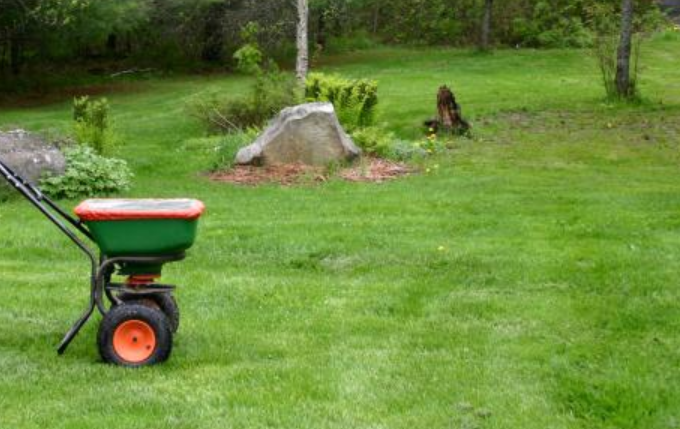
It doesn’t matter how fertile your lawn soil is; overtime, it loses much of its natural nutrients and need to be replenished. Fertilizers contain nutrients such as nitrogen, phosphorus, and potassium, all of which are necessary for the proper growth of the grass.
To achieve a healthy lush green lawn, We do not need to just apply fertilizer on the lawn; we need to do it the right way. Fertilizers are very expensive and using more than necessary is a waste of your hard-earned money and unsafe to the environment.
On the other hand, going for so long without applying fertilizer on the lawn grass could cost you the grass since it will be depleted of essential nutrients. This will lead to unhealthy grass and eventually a lawn full of weeds.
How often to Fertilize a Lawn
A good starting point is to fertilize according to the active growing season of your particular grass, rather than applying fertilizer every few weeks automatically.
Before deciding how often to fertilize, consider:
- Your grass species
- Whether the grass is warm-season or cool-season
- Soil nutrient levels
- Local climate
- Recent fertilizer applications
- Lawn growth rate
- The fertilizer’s nutrient analysis and release rate
- Recommendations on the product label
A lawn that is already growing vigorously may not need additional fertilizer simply because a certain number of weeks have passed.
How Many Times a Year Should You Fertilize?
Many established lawns are fertilized several times during their active growing period, but the number of applications varies.
For example, a lawn may need nutrition during periods of active growth while requiring little or no fertilizer when it is dormant.
Rather than choosing a fixed number such as four, six, or twelve applications per year, determine what your particular lawn actually needs.
A simple approach
Think of fertilization in three stages:
1. Identify the grass.
Determine whether you have a warm-season or cool-season grass and identify the specific species if possible.
2. Determine when it actively grows.
Fertilizer is generally most useful when the grass can actively use the nutrients.
3. Follow the fertilizer label.
The product’s recommended application rate and interval should be your starting point.
When Should You Fertilize in Spring?
Spring can be an important growing period, but the correct timing depends on your grass type and location.
Avoid automatically applying fertilizer simply because the calendar says spring has arrived.
First consider whether your grass has begun actively growing. For cool-season lawns, spring is generally an active growth period. For warm-season lawns, significant growth may occur later as temperatures rise.
If you are also dealing with weeds or planning to overseed, pay close attention to the product you’re using.
Some combination weed-and-feed products contain ingredients that can interfere with the establishment of newly seeded grass.
Always read the product label before applying a weed-and-feed product to an area you intend to overseed.
Should You Fertilize During Summer?
Summer fertilization depends heavily on your grass type and local conditions.
Warm-season grasses generally grow actively during warm weather and may require nutrition during this period.
However, hot weather does not automatically mean your lawn needs fertilizer.
If the lawn is experiencing severe heat or drought stress, applying fertilizer without considering those conditions can create additional problems.
Before fertilizing during hot weather, consider:
- Is the grass actively growing?
- Has the lawn received adequate moisture?
- Is the grass already showing heat or drought stress?
- Does the fertilizer label recommend application under these conditions?
If the lawn is severely stressed, improving water management and waiting for more suitable growing conditions may be more appropriate.
When Should You Fertilize in Fall?
Fall can be an important fertilization period, particularly for cool-season lawns.
Cool-season grasses generally experience strong growth during cooler periods, making fall an important time to maintain adequate nutrition.
However, the exact timing varies by location and grass type and don’t automatically apply fertilizer on a specific date such as October 15.
Instead, consider:
- Your grass type
- Local temperatures
- Current growth
- Soil conditions
- The fertilizer label
- Your expected winter conditions
Can We Fertilize a Lawn in Winter?
During winter, both air and soil temperatures drop drastically, and this sends all plants, not just grass, to dormancy. This is because in those temperatures, there is no sunlight whatsoever and thus there cannot be any growth of plants taking place.
Applying your fertilizer in this season would not be helping in any way. Most of the fertilizer would be washed away by the heavy precipitation experienced in the season and end up downstream. This is a serious contributor to environmental degradation.
Instead of fertilizing your lawn in winter, consider doing so in spring (mid-April) when both the soil and air temperatures are favorable. But still, you have to wait for the soil temperatures to hit 55° Fahrenheit. You can easily tell this when lilacs will start blossoming all over the environment.
The blossoming of the lilacs will be followed by the onset of the growth of grass and this should give you the go-ahead to apply the fertilizer. For accuracy reasons, you can buy a soil thermometer from an agricultural supplies store near you or even online.
At this time, the grass has resumed growth and the fertilizer will act as a boost to spring up after so many days of dormancy.
Can I fertilize my lawn every 2 weeks?
No, you cannot fertilize your lawn every two weeks. Doing so is a waste of money and effort because the grass does not need that much. What will happen is that you will be left with too much fertilizer on the surface of your lawn and at the end of the day; most of it will go to waste.
The need to fertilizer your lawn every two weeks is brought about by faster results, in this case you can use the faster release fertilizers. Often, the faster release fertilizers are synthetic and have a higher N-P-K rating that boosts the growth of the grass in a very short span.
They are most recommended for young new lawn grass since this one needs a boost to spring up. On the flip side, they have chemicals that do more than harm to your lawn soil, something that will affect the proper growth of grass later.
The faster results, the shorter the nutrients last in the soil and this calls for frequent applications. As an alternative, go for the slow-release fertilizers. They do not give immediate results but they are the best since they are made of purely animal and plant matter.
Slow release fertilizers do not contain harmful chemicals undesirable for your lawn soil. The results may take some time to show but once they start, they will be a long time. These fertilizers are recommended for established lawn grass, compared to new grass.
Does Fast-Release Fertilizer Need to Be Applied More Often?
Fast-release and slow-release fertilizers behave differently.
Fast-release fertilizer
Fast-release products make nutrients available relatively quickly and can produce a faster response because the nutrients become available more rapidly, the application rate and timing need to be followed carefully.
Slow-release fertilizer
Slow-release products release nutrients over a longer period and this can provide more gradual nutrition and may reduce the need for frequent applications. Neither type is automatically “best” for every lawn.
Choose based on your grass, soil, goals, and the fertilizer manufacturer’s recommendations.
Things to Check Before Fertilizing
Before spreading fertilizer, ask:
- What type of grass do I have?
- Is it actively growing?
- Does the lawn actually need additional nutrients?
- Have I recently fertilized?
- What does the fertilizer label recommend?
- Is the lawn experiencing drought or heat stress?
- Would a soil test help me understand what the lawn needs?
If you cannot answer these questions, don’t simply increase the amount of fertilizer.
What Is the Best Time of Day to Fertilize?
There isn’t one universal clock time that is best for every fertilizer product, follow the product’s instructions and consider the weather. Avoid applying fertilizer immediately before heavy rainfall unless the product specifically recommends that approach and also avoid conditions where fertilizer could easily be blown away or washed off the intended application area.
The goal is to apply the product evenly and according to its label instructions.
In Conclusion
Proper lawn fertilization is essential for maintaining thick, green, and healthy grass throughout the year. Since lawn soil gradually loses nutrients over time, applying fertilizer at the right time and in the correct amount helps replenish essential elements needed for strong root development and healthy growth. Seasonal fertilizing schedules in spring, summer, and fall provide the lawn with the nutrients it needs to withstand heat, drought, foot traffic, and winter dormancy.
Frequently Asked Questions
1. Why is lawn fertilization important?
Fertilization helps replenish essential nutrients such as nitrogen, phosphorus, and potassium that grass needs for healthy growth, strong roots, and a lush green appearance.
2. How often should I fertilize my lawn?
Lawns should be fertilized several times during the growing season, typically in spring, summer, and fall, depending on the grass type and climate.
5. Can I overseed after applying weed-and-feed fertilizer?
No. Weed-and-feed fertilizers may prevent new grass seeds from germinating properly.
6. When is the best time to fertilize a lawn in summer?
Summer fertilization is typically done between June and August to help grass withstand heat, drought, and heavy foot traffic.
7. Can I mow before fertilizing?
Yes. Mowing before fertilizer application allows nutrients to penetrate the soil more effectively.
8. What time of the day is best for fertilizing a lawn?
Morning is usually the best time because temperatures are cooler.
9. Can I fertilize my lawn every two weeks?
No. Fertilizing every two weeks is excessive and may waste fertilizer, damage the lawn, or pollute the environment.
10. What happens if I over-fertilize my lawn?
Over-fertilizing can burn grass, weaken roots, pollute nearby water sources, and create unhealthy soil conditions.
11. What is fast-release fertilizers?
Fast-release fertilizers provide nutrients quickly and promote rapid grass growth, making them suitable for new lawns or quick green-up.
12. Is fast-release fertilizers harmful?
Some fast-release fertilizers contain synthetic chemicals that may negatively affect soil health if overused.
13. What is slow-release fertilizers?
Slow-release fertilizers gradually feed the lawn over time, providing long-lasting nutrients and healthier soil conditions.
14. Which fertilizer type is the best for established lawns?
Slow-release fertilizers are generally best for established lawns because they provide steady nutrition and improve soil quality.
15. Can fertilization help prevent weeds?
Yes. Healthy, thick grass created by proper fertilization can naturally crowd out weeds and reduce weed growth.
16. What is the key to successful lawn fertilization?
Applying the right fertilizer in appropriate time and in the correct amount is the key to maintaining a healthy, green, and durable lawn.

