
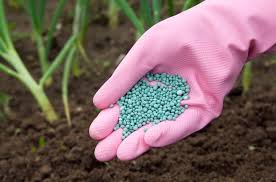
One of the most important aspects when sowing new grass or laying sod is fertilizing it. This way, you are making sure it has all the nutrients it needs, allowing it to grow strong and become well established in your lawn.
However, there is more to it than just throwing on an all-purpose fertilizer at any time and hoping for the best. Rather, it is an exact science that depends on several factors, and to help you understand, here is everything you need to know about when to fertilize new grass.
Why do you need to fertilize new grass?
Before we talk about when to fertilize your new grass and how, let’s start by thinking about why we need to do it at all.
Sometimes it’s easy to forget that a lawn is made up of thousands of tiny grass plants, and each one needs the right conditions to grow and thrive. By providing the young grass with the perfect environment, you can help it grow into a lush and healthy lawn.
Grass seeds and seedlings need the right mixture of moisture, temperature and rich soil to germinate and send down strong roots, and giving the grass the food it needs will help it do this.
Understanding more about fertilizer
Since grass is a living organism, like anything else that’s alive, it needs to eat. It usually takes its food from the ground, but over time, the nutrients naturally found in the soil are used up and need to be replaced.
The most important nutrient established grass needs to remain in good health and keep growing is nitrogen, and when it has the right amount, the grass leaves above ground can grow properly and your lawn will have the lush green color you desire.
However, to germinate and send down strong roots, grass seeds also need phosphorous and potassium. If these essential nutrients are present, the seeds and seedlings will be given a big boost right when they need it, helping your new grass get off to the perfect start.
This is why fertilizing your new grass at the right time is such an important consideration – because if you just throw out a few handfuls of seed and leave it to take care of itself, you are making life more difficult for the grass before it even sprouts.
Choosing the right fertilizer
What this means is, when trying to grow new grass, you need to choose a special kind of fertilizer known as a “starter” – because fertilizers for new grass and fertilizers for established grass don’t have the same composition.
The three nutrients we mentioned, nitrogen, phosphorous and potassium, should all be present in starter fertilizer, but may not be present at all in regular lawn fertilizer.
When buying fertilizer, you will often see the ratio of these three nutrients written on the packaging, usually in this order.
Regular lawn fertilizer usually has a ratio of something like 30:0:0 or 27:3:3 since established grass doesn’t require phosphorous or potassium. However, with starter fertilizers, you are more likely to see ratios like 21:22:4, which will help your new grass get off to the best start.
Regular fertilizers are also said to be “slow release” because they don’t make the nutrients available all at once. This way, they keep your lawn fed for a longer period.
However, starter fertilizers should be “quick release”, meaning once you have applied the fertilizer, the nutrients are available for the new grass right away.
When to fertilize new grass
When it comes to the timing of fertilizing new grass, there are two major factors to consider –what time of year to seed the grass and when to add the fertilizer itself.
The first of these will depend on where you live, and we can divide the US into two broad regions, the cooler north and the warmer south.
If you live in the northern part of the country, your lawn will probably consist of a cool-season grass species, in which case the best time of the year for reseeding is at the end of the summer or in early fall.
This is because this coincides with the main growing season for the grass, so it will be able to become well established once it germinates before the frosts arrive at the start of winter. Weed activity is also less pronounced at this time, so it will have less competition.
The relatively warm soil will also help with germination while the cool air and sunlight will encourage growth.
Another possibility is sowing grass in early spring. At this time of year, it will benefit from many of the same advantages as at the end of the summer. However, it will also have to compete with weed growth, which is why this is the second-best choice.
How to prepare the soil for seeding, overseeding or laying sod
When you have decided which time of year to sow your seed and have selected the grass species you want to sow, the next step is to prepare the ground.
To find out which fertilizer to use, you should take a sample and have it tested. Your local garden center can do this for you. This will tell you more accurately which kind of fertilizer to buy with which ratio of each type of nutrient.
It will also tell you about the pH level of your grass, which is another important consideration. Grasses all prefer slightly acidic soils of around pH6.5, so if a test reveals it is too acidic, you can also consider applying lime to lower the acidity before seeding.
Next, if you are overseeding (seeding an area of existing lawn to help thicken it up), you should remove any thatch layer that has developed there. If your soil is compacted, it will also help if you aerate it before continuing.
On the other hand, if you are reseeding an area completely, you can use a rototiller to turn the soil to a depth of around six inches in preparation for the fertilizer.
Once this is done, it’s time to add the fertilizer. You can do this a few days before you seed your lawn or at the same time, the effect will be the same.
When should you re-fertilize new grass?
You might imagine that giving your new grass more food would be the best way to help it grow, but it doesn’t need it, and it may actually harm it.
At the same time, lawns need regular fertilizing to stay healthy, and you should feed yours at least twice a year. This will help it remain thick and luxuriant, which is the best way to keep it free of weeds and pests.
If you are growing cool-season grass in a northern part of the US and you seeded in spring, you probably won’t need to fertilize again before fall.
Fertilizing in fall with then give your lawn the nutrients it needs to survive the cold winter, and it will be ready to start growing again the following year. However, make sure you do this well before the first frosts of winter arrive or it will harm your grass.
Conversely, if you sow in late summer or early fall, the grass will already be well-fed and ready for the winter, so you won’t need to fertilize until the following spring just before the spring growing season begins.
With warm-season grass, wait till it reaches around 1½” and keep an eye on it. It should continue to look green and healthy, but if it begins to look a little weary, you might consider giving it another dose of fertilizer.
Tips for success
1. Don’t over-fertilize
Make sure you don’t over-fertilize your lawn or it could lead to problems. If you give your lawn too much fertilizer, your grass could grow too much, which will mean you have to mow it more often, something it won’t enjoy.
Fertilizer can also encourage the growth of weeds and the development of thatch, and too much fertilizer can even damage or kill your lawn, meaning it will do more harm than good.
Finally, excess fertilizer can leach out of your soil and into the local water system and can even cause toxic algal blooms in ponds or lakes. You need to be responsible when using fertilizers because using too much can be detrimental to your wider environment.
2. Don’t use starter for established grass
A key point to remember is not to use starter fertilizer again after the initial application. Established grass doesn’t require phosphorous or potassium to grow, and adding starter for the second fertilization of your new lawn may damage or kill it.
Furthermore, since phosphorous can be harmful to the environment, in some states, its use is restricted to when starting new seeds – so by using starter for the second fertilization, you may even be breaking the law.
3. Don’t use “weed and feed”
Another important point to note is that you shouldn’t use so-called “weed and feed” fertilizer as a starter. This is because it contains a special anti-weed formula that is designed to prevent weeds from germinating.
The problem is, it does the same to grass seed, so if you use weed and feed with new grass, you are likely to find that it simply doesn’t grow at all.
Time it right for perfect results
As you can see, with grass seeding and fertilizing, timing is everything. You need to know the best time of year to fertilize and seed your lawn to give the grass the best chance of growing, and then you need to know when to give it the next dose of fertilizer after that.
Much also depends on where you live and the type of grass you are trying to grow, but by follow the guidelines in this post, you should now know when to fertilize new grass, whether you are reseeding, overseeding or laying grass in the form of sod.
Conclusion
Fertilizing new grass at the right time can help young seedlings or newly established turf develop into a healthy, well-rooted lawn. However, more fertilizer does not necessarily mean faster or better growth.
Before applying fertilizer, consider the type of grass, how it was established, the condition of the soil, and the instructions on the fertilizer label. A soil test can also help you determine whether additional nutrients are actually needed.
Whether you are planting grass seed, overseeding an existing lawn, or laying sod, focus on establishing strong roots rather than simply encouraging rapid leaf growth. Apply fertilizer carefully, avoid over-fertilizing, and give the new grass the moisture and growing conditions it needs to become established.
With the right timing and a careful approach, you can give your new lawn a much better start.
Frequently Asked Questions
When should I fertilize new grass?
The timing depends on how you established the lawn, the grass type, soil conditions, and the fertilizer being used. For newly seeded grass, follow the fertilizer label and consider soil-test results rather than applying fertilizer on a fixed schedule.
Should I fertilize before or after planting grass seed?
Starter fertilizer may be applied before or around the time of seeding when the product is intended for that purpose. Always follow the product’s application instructions and avoid applying more than the recommended amount.
How soon can I fertilize after grass starts growing?
There is no single number of days that applies to every lawn. Wait until the new grass is becoming established and use the fertilizer label, grass type, and soil-test results to determine whether another application is necessary.
Can I use regular lawn fertilizer on new grass?
It depends on the product. Some fertilizers are specifically formulated for established lawns, while others are designed for new grass. Check the label to make sure the product is appropriate for newly seeded or newly established turf.
Can I fertilize newly laid sod?
Newly laid sod may require fertilizer, but the exact timing depends on the condition of the soil, the sod, and the fertilizer being used. Avoid adding fertilizer simply because the sod is new; follow the product directions and any recommendations provided for the sod.
Can I use weed-and-feed on newly seeded grass?
It is generally important to check the product label before using weed-and-feed on newly seeded areas. Some weed-control products can interfere with newly germinating grass, so only use a product when its label specifically permits application to new grass.
What happens if I over-fertilize new grass?
Too much fertilizer can damage young grass, cause fertilizer burn, encourage excessive growth, and potentially contribute to nutrient runoff. Applying the recommended amount is safer than trying to speed up growth with extra fertilizer.
Does new grass need phosphorus?
Not necessarily. The need for phosphorus depends on the soil and the requirements of the grass. A soil test can help determine whether phosphorus is needed before you choose a fertilizer.
How do I know if my new lawn needs more fertilizer?
Look at the condition and development of the grass, but don’t rely on appearance alone. Soil testing and the fertilizer manufacturer’s recommendations can provide a better basis for deciding whether another application is necessary.


