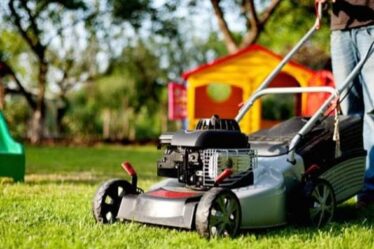
Do you ever set out to mow your lawn, and everything goes smoothly? The blades are slicing through the grass like they’re not even there. The sun is shining.
You’ve got your favorite music playing. Then you turn around and find your garden looks more like a Monopoly board than a beautifully cut lawn. If you don’t follow some specific rituals or checks before you cut your lawn, then you can end up with a problem like this.
If only I had a dollar for every time this had happened to me. I would spend hours in the burning sun, cutting the lawn as precisely as I possibly could, only to leave those horizontal lines all over the place.
It was a disaster. That was until I learned these 8 reasons my lawnmower left those ugly horizontal lines. Today, I am going to share them with you. I will even share some free tips to help you make sure your next mow is completely free of lines.
Ready to dive right in? Let’s get started.
1. When mowing your lawn too fast.
The first reason, and perhaps the most common, is mowing too fast. Uncut lines can appear when you mow too quickly because the engine has to work harder and maxes out its throttle.
Engine problems can cause several gardening issues. The solution is as simple as the problem: Go slower! Take your time. Don’t run the engine at full throttle, and you won’t leave any lines.
2. You aren’t overlapping on the rows.
Again, another common error when mowing the lawn. Always make sure you aren’t leaving a little space between the columns you mow. If you don’t leave a gap, the mower’s blades will pull upwards, and the tires will press downwards, which is what creates the lines in the grass.
Again, you can’t just mow the edge of the rows you just previously cut. You must leave a couple of inches on the previous row so you can cut the line your tire just mowed. If you don’t, you’ll make the lines you created even deeper.
3. When blades are too small.
This issue is most common for gardeners who have bought new blades or sent their mower away to have the blade on it replaced. So, if your lawnmower worked fine for years, and then after you replaced the blades it started to show these issues, then the blades might be too short for your lawnmower.
I mean, the reason why this causes lines is simple. If your blades are too short, they won’t reach all the way across and cut the whole row you are mowing. This leaves small gaps between the rows you cut.
4. Your blades are too blunt.
This issue usually affects people who use self-propelled lawnmowers. If you notice lines in your lawn after you mow, check that your blades are sharp enough to cut. To make sure that your blades are suitable, you should sharpen them once or twice per season.
Oh, and blunt blades can cause other problems, too. They can damage your grass and may leave jagged yellow tips after you mow. Follow the procedures above to avoid this problem.
5. Your engine settings are wrong.
Sometimes, your lawnmower might leave lines because of engine performance. As mentioned in the first point, make sure you aren’t pushing the engine too hard.
You can adjust the engine settings yourself; you won’t need an expert or professional. You can do this by adjusting the throttle cable. When you leave your lawnmower engine on a higher speed setting, you may notice lines after mowing.
6. When having fuel problems.
Again, tying in with the last point on engine performance. If your fuel quality isn’t up to scratch, your lawnmower’s performance will reflect that.
To avoid leaving lines, avoid using fuel from the previous season. It can lose quality after more than 4 weeks inside the engine’s carburetor.
This can cause the fuel to gum up and get stuck in the engine, reducing overall smoothness and performance. The result is a sluggish display, leading to those dreaded lines in your garden.
7. When your blades are too small.
So, we’ve already talked about having blunt blades and blades that are too small. But they aren’t the only issues that can lead to poor cutting.
If you notice lines in your garden, check that your blades aren’t curled, warped, or otherwise defective. The only real fix is to have your blades checked and replaced if needed.
It’s not uncommon to have blades that are backward or otherwise misaligned. But don’t worry, because this is the exact kind of issue that you can solve yourself, no real expertise needed. Oh, and if you’re asking yourself, ‘how on earth do I do that?’ that’s right, we have got you covered.
8. You’re doing something else wrong.
So if you have read through the list, and nothing seems to ring a bell, then this last option might be for you. Try the following options if you’re still getting lines on your grass when you mow.
- Your engine is running at a below-optimum speed. As we mentioned in point 5, make sure your engine is set to optimal settings and that you’re mowing at an adequate speed to avoid poor cutting performance.
- Your tire pressures are wrong. If your tires are uneven or generally overinflated, make sure they are at the optimum pressure. Failing to do so will leave the dreaded lines pattern on your garden lawn.
- Also, make sure your lawnmower doesn’t have a floating deck, and turn slowly at corners to avoid missing grass spots when you mow.
What to do about lines in your lawn after mowing.
Well, there you have it: the 8 most common reasons for lines in your lawn after you mow. The solution is simple: take care of your blades and use the cutting technique outlined above.
Also, make sure your lawnmower is of sufficient quality. If you use a cheap and/or old lawnmower, the quality of your grass cuttings will reflect that. No amount of gardening technique can fix poor equipment. Always make sure your lawnmower is of reasonable quality, and have an expert check it if you think you have any problems.
If you still need help avoiding lines in the grass when cutting, check out this awesome YouTube video, which explains the problem in more detail.
Conclusion
In conclusion, there are several reasons your lawnmower might leave lines in your lawn, and we covered most of them in today’s article. If you take extra care the next time you mow, you should notice an improvement like this.
Keeping your lawn in perfect condition isn’t always easy. It takes maintenance, technique, and hard work too. But the price of a garden the neighbors will envy is definitely worth it. It means going the extra mile to keep it in good shape, but that’s what makes it so fun, right?